.png)

.jpg)
Behind the Hard Hat: Meet the leaders of the energy transition
Muhammad Irfan is Founder and CEO of IZ Energy, a Barking-based retrofit company tackling fuel poverty through tailored survey recommendations for insulation and renewable technologies, while actively connecting households to available government subsidies.
He’s also a serial entrepreneur in the energy efficiency sector, having previously co-founded two other companies.
But for Irfan, this work goes beyond delivering measures: it’s rooted in community and long-term relationships. As he puts it, “I installed my first insulation in early 2014 - that client is still in contact and recommends IZ Energy to his family and friends”.
Irfan’s affinity for logical thinking was clear early on. His favourite subject at school was Maths, a reflection of the problem-solving mindset that now shapes his approach to building a business. Yet understanding how he worked best was a longer journey. “It took me time to understand my own skill set, but I did not give up on my dream to find the right career for me,” he explains.
Rather than holding him back, these insights allowed him to recognise that he thrived in environments where he could be independent, tackle complex challenges and innovate. Entrepreneurship therefore suited him far better than conventional employment.
Mentorship has also been essential to Irfan, who’s a strong believer in surrounding yourself with people who push you to grow and strengthen your resilience – a theme that reflects the broader importance of supportive networks in developing a capable, adaptive retrofit workforce.
Irfan entered the retrofit and energy efficiency sector “accidentally” in 2011, first introduced by a friend who was already working in the sector. What began as curiosity quickly became conviction: driven by the Green Deal Scheme at a time, Irfan was excited to realise that this new sector had enormous potential.
He began his journey as a Domestic Energy Assessor, but within a year was ready to found his own company in the space.
In Early 2014, he started delivering insulation under the Green Deal Home Improvement Fund (GDHIF), which created the need for his first hire and marked the beginning of steady expansion. As the business grew, so did the number of households recommending IZ Energy to friends and family: a testament to trust built at a local level.
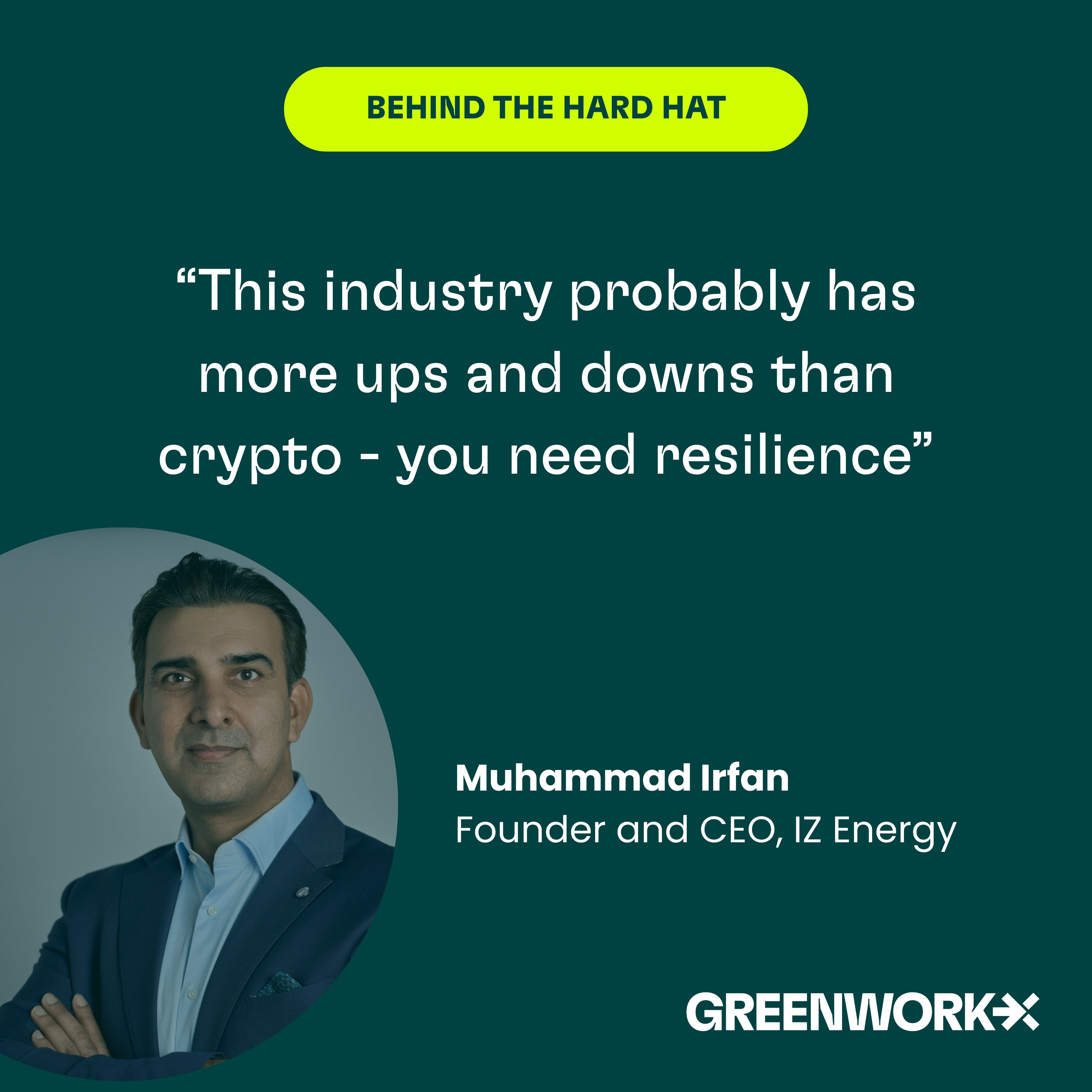
Reflecting on the volatility of the sector, Irfan is direct: “This industry probably has more ups and downs than crypto.” Policy shifts, funding cycles and market uncertainty have all shaped his experience. But rather than deter him, these challenges have motivated him to focus on “building a more sustainable business model that does not get affected when the Government changes their minds.”
To do this, he first invested in himself as a leader. “I realised that to grow, I needed to learn more skills,” he says, reflecting on his enrolment in Cambridge Judge Business School. “I don't believe that things happen with just luck. With hard work and learning, you can achieve the results you want.”
For Irfan, resilience is essential as an entrepreneur - and it’s particularly important in the retrofit sector. “When you hit a crisis, you develop resilience and then you either quit or you learn to adapt and start seeing the cycles,” he reflects. Challenges become opportunities to build new capabilities. “You equip yourself with more skill sets, which not only help you to break that cycle but also become stronger moving forward.”
Looking ahead, Irfan is confident that retrofit will become a mainstream investment for households. As he puts it, “the time will come when you will have a return on investment, and people will invest into retrofitting their homes instead of relying on government subsidies.”
His advice for others in the sector is clear: surround yourself and your team with people who have a growth mindset, and believe in what you’re doing, to build resilience.
Despite the volatility of the past decade, his optimism is unwavering. “I’m still positive that this industry is the right choice.” And at the heart of that belief are the same relationships that shaped his journey from the start - the households he has helped, the communities he is part of, and the people who still visit for tea ten years later.