.png)

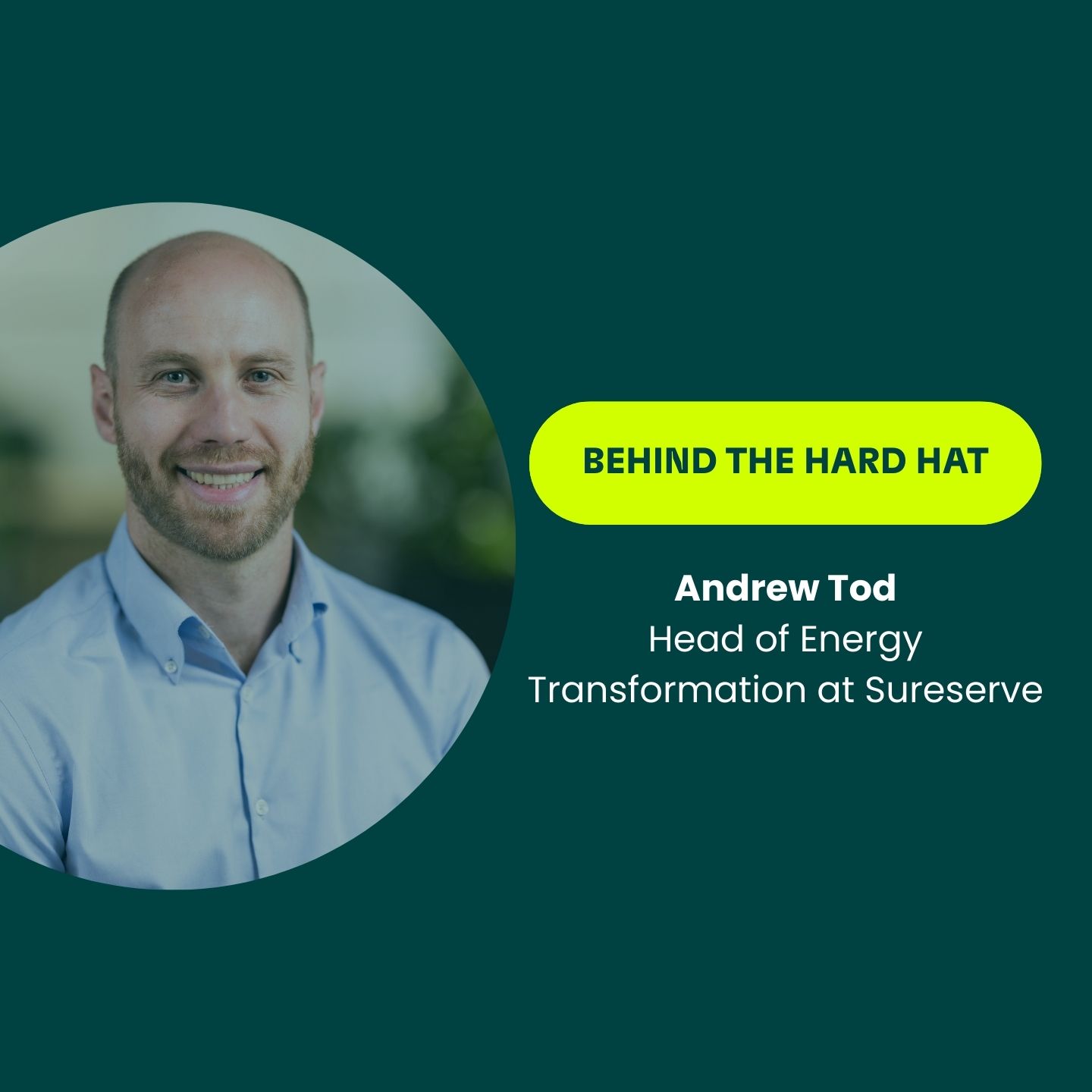
Behind the Hard Hat: Meet the leaders of the energy transition
Andrew Tod was championing sustainability long before it was 'cool'. With 18 years in the sector, he has navigated an industry that has shifted from a niche concern to a national priority, steering through the volatile tides of policy and technology. This has given Andrew a unique perspective on the industry and what it needs going forward.
Andrew is currently the Head of Energy Transformation at Sureserve: a contractor working across heating system installation and maintenance, building compliance, and retrofit and renewables. They are leading the energy transition for the social housing sector and public and commercial buildings. Andrew’s role involves a combination of retrofit and renewables expertise and thought leadership, with topics such as collaborating on green skills and proactive approaches to resolving damp and mould and promoting health in housing.
Having grown up in the countryside, with a childhood spent mostly outdoors, Andrew developed an early interest in nature and geography. As he learned more about human interaction with natural systems, and human impact on the environment, he was motivated to deepen his studies and enter energy and sustainability as a career path.
"I would say I was doing this before it was 'cool'; before it was a priority for business, consumers, or politicians," he reflects. This early start provided a unique vantage point, allowing him to witness the maturation of the clean energy industry from its infancy into a multi-billion-pound pillar of the economy.
Career paths are rarely linear. A period of redundancy, which might have deterred others, served as a catalyst for Andrew’s international exploration and personal growth. Working on renewable energy and micro-grid projects in Nicaragua and Kenya, he gained a global perspective on energy access and the critical nature of infrastructure.
These experiences of working with people within the local communities, from different backgrounds and cultures, had a lasting impact on Andrew. “It taught me that you can't rush into decisions. You've got to absorb as much as you can from different people who have got slightly different drivers and opinions, and base your decisions on as much information as you can get,” he reflects.
These experiences helped to inform his current work within the UK social housing sector. Today, his focus is on how retrofit and decarbonisation can improve lives at home. "While I still care about the climate and the financial impact, we have social housing residents to think about as well. Considering the impact of housing on their health and energy bills on their wallets changes the motivation," he explains.
As the sector scales to meet ambitious Net Zero targets, the conversation often fixates on the shortage of traditional tradespeople. However, Andrew also identifies some other equally critical skills gap: the need for sophisticated data analytics, contract management, and programme management.
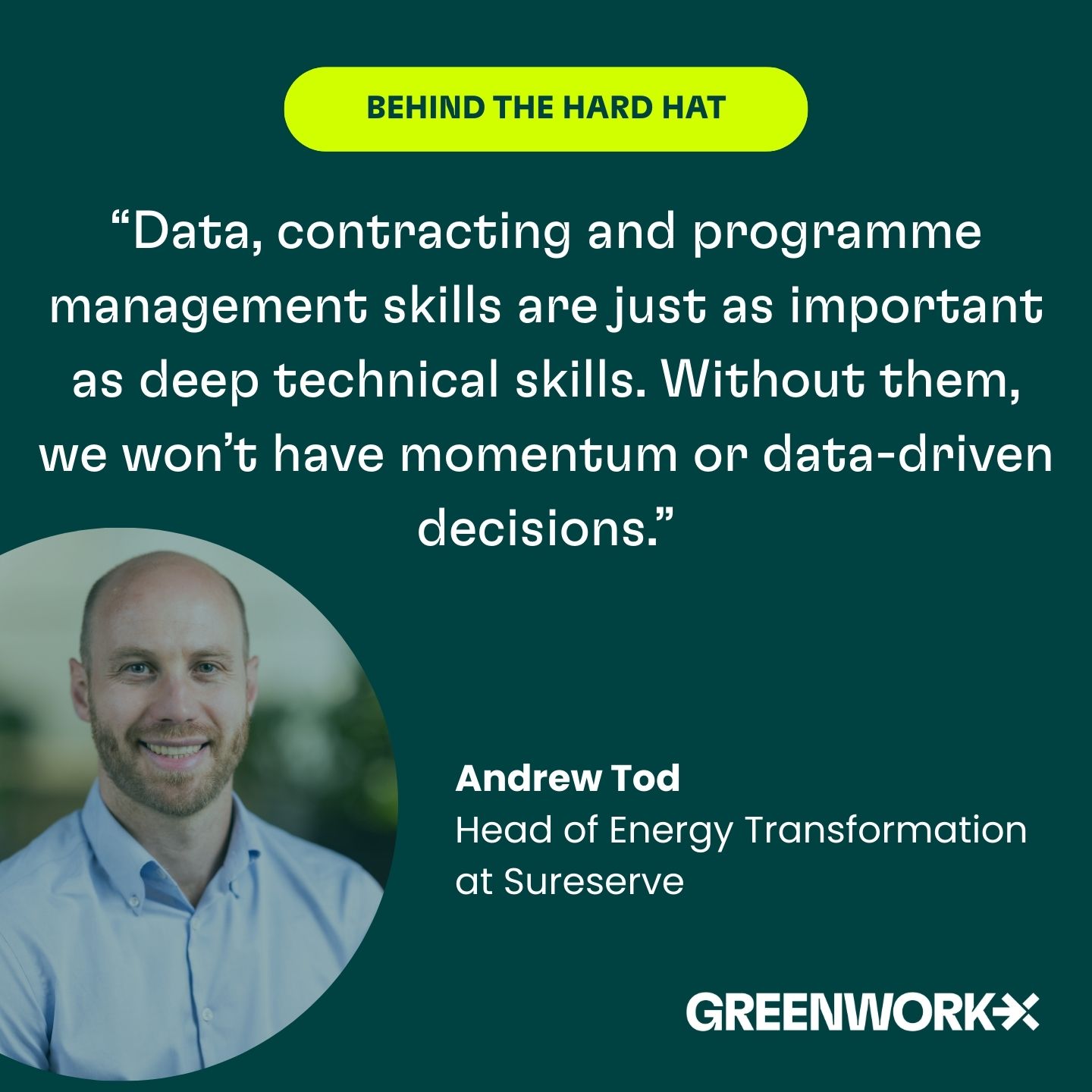
"Those skills are just as important as trade skills and deep technical skills. Without them, we won’t have momentum or data-driven decisions," Andrew notes.
In his view, a modern retrofit workforce requires individuals who can manage administrative and compliance hurdles while using data to drive large-scale delivery. Without this analytical layer, the industry risks inefficient decision-making and delivery that hampers the pace of transition.
The journey has not always been smooth. Like many in the energy efficiency space, Andrew has lived through the "ups and downs" of shifting government policies and funding cycles. He recalls a time when sustainability was an afterthought in professional settings.
"At the start of my career, I was always the last slot on the agenda, often bumped off because there was no time," he says. The shift from being an ignored line item to a central pillar of national infrastructure has been dramatic, but challenges remain. Andrew emphasises the need for resilience, urging businesses to build models that withstand political cycles. By focusing on long-term value rather than short-term subsidies, the sector can create the stability required for a sustained transformation.
For those entering the sector today, Andrew recommends curiosity, continuous learning and creating your own opportunities. “Ask loads of questions and try to learn something all the time. Just go for it. Create opportunities for your learning and growth, because they are not going to land in your lap. But if you create a case for training and you have a proactive organisation, they will listen and support your development. Taking those chances has helped me continue growing.”
Despite nearly twenty years in the field, Andrew’s passion remains undimmed. He has seen the industry move from the fringes to the mainstream, and he remains driven by the tangible impact decarbonisation has on people's lives.
When reflecting on his future, his answer is simple: "I can't picture myself doing anything else."