.png)

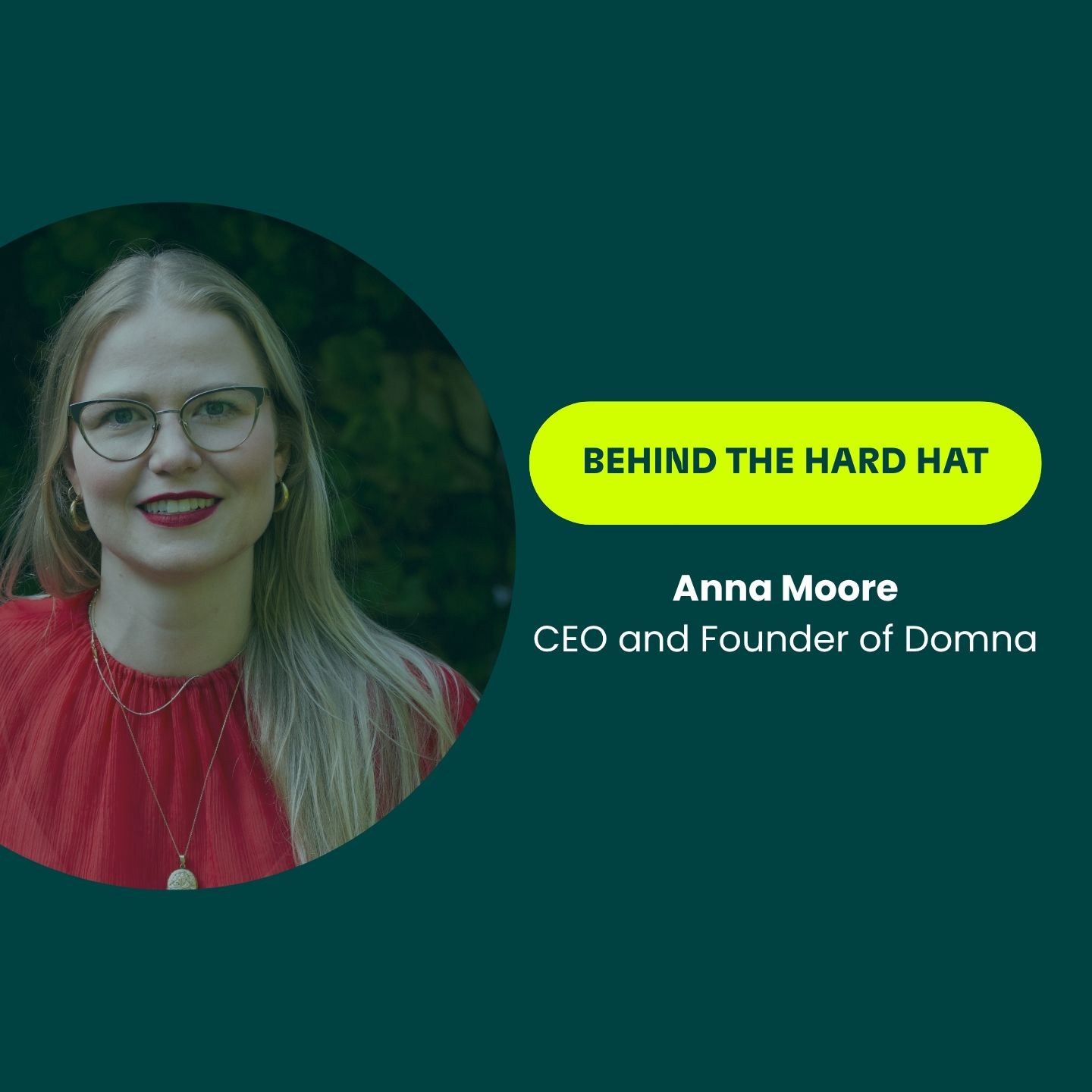
Behind the Hard Hat: Meet the leaders of the energy transition
Anna Moore was a newly elected partner at McKinsey when a senior colleague set out her future: senior partner in four to six years, retirement after that, board seats to follow. "I was 29," she recalls, "and I asked myself: have I done my life?"
That question changed everything. Anna had been leading McKinsey's UK construction and materials practice and co-leading its European sustainability practice, working at the intersection of decarbonisation, the built environment, and the materials sector. From the outside, the path was clear. But from the inside, it wasn't enough. Anna felt she had been given too much - too many opportunities, too privileged a position - to spend the rest of her career on personal advancement alone. So she took the leap and left to found Domna, a retrofit specialist that works on 10,000 homes a year across the UK, combining predictive stock assessment modelling with hands-on project delivery via a team of over 70 retrofit assessors, coordinators and designers.
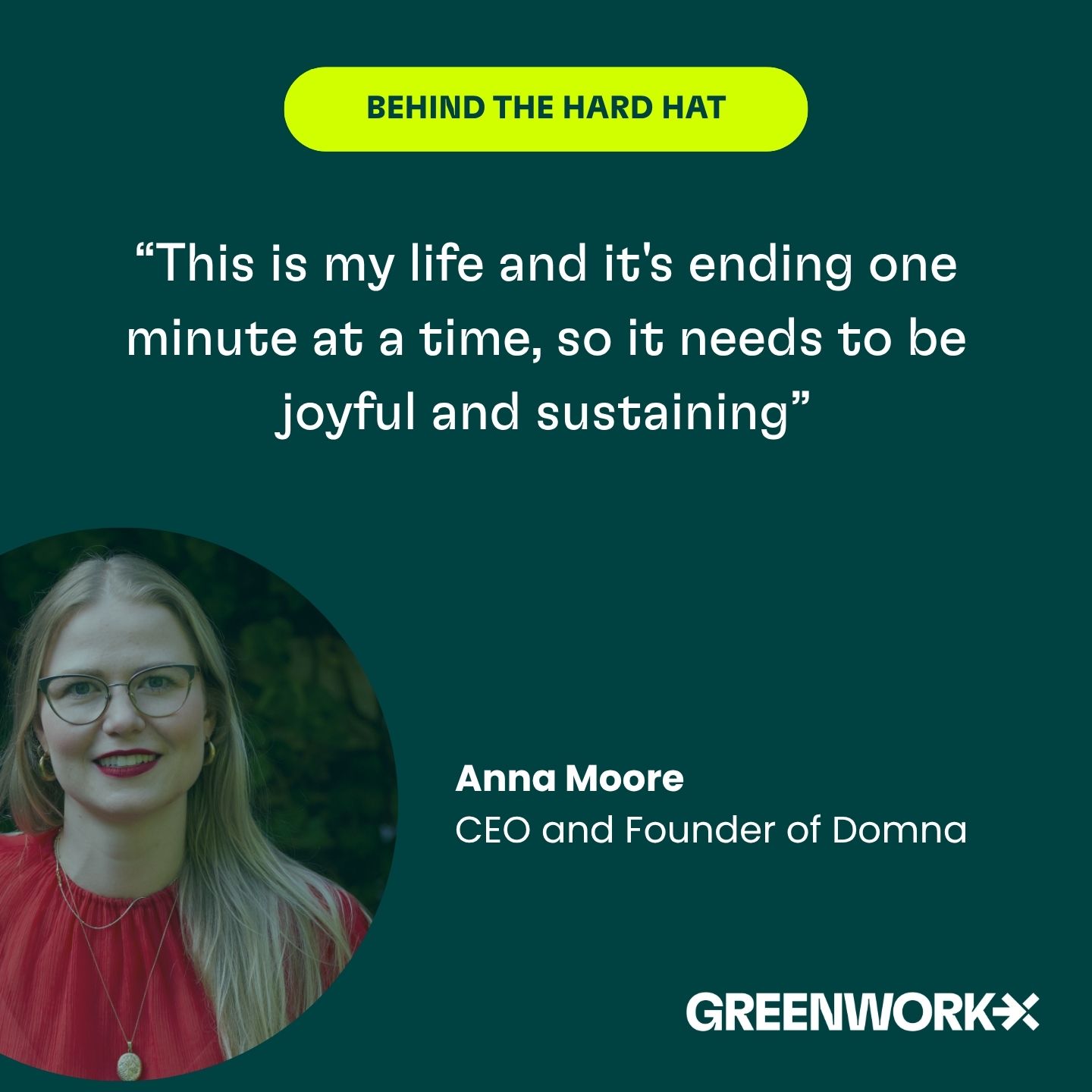
That sense of a life to be lived, not just a career to be managed, runs deep. Some of the best advice Anna ever received came from Dominic Barton, then McKinsey's global managing director, when she was his Deputy Chief of Staff: be interesting. "It’s so easy to get tunnel visioned on career, but this is my life," she realised. "It's ending one minute at a time, and it needs to be joyful and sustaining." For Anna, that includes staying genuinely curious and keeping her childhood passion for history alive; just ask her about her favourite history podcasts and the latest Yale online lectures on everything from the American Civil War to the fall of the Roman Empire.
Domna's origin is also a diagnosis. When Anna surveyed the retrofit landscape from McKinsey, she saw two types of business failing to connect: VC-backed software companies strong on data but disconnected from delivery, and traditional consultancies and contractors that lacked the technical rigour the net zero agenda demands.
"The tech is fine," she notes, "but it's a lead generator in our sector, not a sustainable standalone long-term business. And if it's not married up with delivery realities, you can get to the point where you've made a great plan but it's not going to survive contact."
Domna's model bridges that gap: Ara, a predictive stock assessment tool drawing on four billion data points and delivering 98% accuracy, paired with the practitioners who turn insight into action.
Running a highly technical business in a sector with a well-documented skills shortage has sharpened Anna's thinking on workforce development. Her view is clear: someone’s willingness to learn matters far more than their background. And this isn’t just a theory; she can proudly list examples of some of her most skilled technical colleagues who come from non-traditional backgrounds.
That belief in potential shapes workforce development at Domna. Technical staff have defined routes from assessor to coordinator to designer, with training funded by the company. But Anna is just as deliberate about non-technical roles, which is something she sees many firms get wrong.
When Domna acquired a business where the administrative team had no defined route for development, she moved quickly to change that. "I hate that kind of thing, and it’s absolutely not how we're going to run," she recalls saying. “Everybody in our business needs to see a clear pathway for development."
Annual appraisals and monthly feedback sessions are how that commitment to growth stays real, but keeping that discipline in place takes deliberate effort. "You have to be intentional about it," she notes, "because in a small business, it's really easy to just get overwhelmed by doing the doing. But I think making sure we spend time on these things is core to my role."
Anna thinks people might be surprised to learn about the importance of her spiritual life, but this is a significant part of how she leads; a commitment to living and working in integrity with her values.
In practice, that includes rejecting common assumptions and stereotypes. "Sometimes we can have assumptions that salespeople need to be smashing the phone and super aggressive, or in dealing with contractors and installers that it's an industry where everybody's trying to con you and you've got to be really hard on people," she says. "But I just don't find that that's very effective, and it's not in line with how I believe we should be treating people."
Anna also feels strongly that making time for your personal passions (like history podcasts) helps her not only live a joyful life, but connect with others. “We deal with people, right? If you're not able to engage with people on things that they care about and things that you care about, what do you bring to the table? I think about that a lot.”
By the end of a conversation with Anna, it’s hard not to notice that people are never far from the centre of it, from her team to the tens of thousands of households across the UK that Domna supports. It is, in the end, exactly what she set out to do: to contribute something that matters.