.png)


Behind the Hard Hat: Meet the leaders of the energy transition
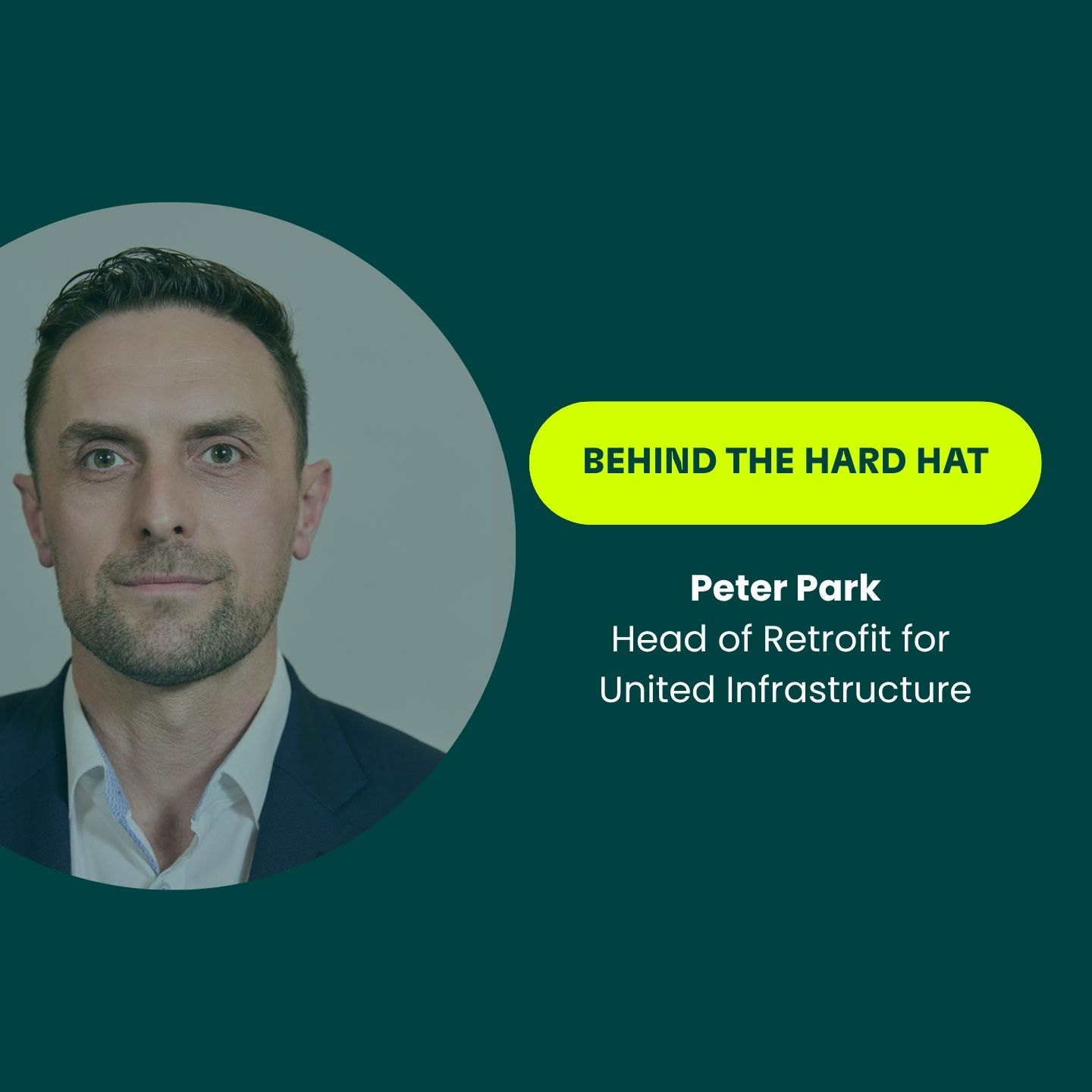
Peter Jackson loved science at school because it came with a formula, “a cheat code,” he calls it, laughing. Decades later, as Managing Director of RE:GEN North West, he has arrived at a different kind of formula: however you calculate it, everything comes down to people.
RE:GEN North West focuses on improving people’s lives through sustainable social housing, delivering refurbishment, retrofit and decarbonisation, regeneration and new build projects for some of the region’s leading social housing providers.
Peter describes himself as “a real open book,” happy to admit that he probably “wears his heart on his sleeve too much sometimes.” It’s a rare admission from a managing director, but for someone whose business exists to change people’s lives one home at a time, it makes sense.
That combination, an analytical mind paired with a deep personal investment in outcomes, traces back to Peter’s childhood.

Peter grew up in council housing in Salford in the 1970s. Partway through that decade, his family moved from a house with no double glazing and rotten window frames, where the curtains would move whenever the wind blew, into a newly renovated council house with new windows, a new boiler and a new kitchen. “The impact that had on us was amazing, really,” he remembers.
That single change stayed with him. “If you’ve got a decent home, you’ve got a good foundation to build your life upon,” he says. It’s an idea that eventually drew him from major commercial construction projects into social housing. “I kind of stumbled into the sector,” he admits, but he quickly found a reason to stay: “I love seeing the outcomes that we create for people.”
Peter’s analytical streak runs deep. At school it was science, “because you didn’t have to remember anything apart from the formula, and you could work it all out in the exam.” As a managing director, that instinct shows up differently now. “You’re looking for trends, analysis, patterns,” he explains. “A lot of my focus is analysing situations and information.”
But the real turning point in how he thinks about leadership came later, at Henley Business School. “At school, they taught you what to think,” he reflects. “Professional training is learning how to think, and how to look at things, rather than having a specific answer to a specific question.” The course put him alongside leaders facing the same challenges across completely different industries, and it reframed how he saw his own role. “The biggest change for me was distinguishing between management and leadership; thinking about how people are motivated, why they behave in certain ways, and how people can all work in different ways to get to a shared outcome. It all boils down to people.”
At RE:GEN North West, understanding people means understanding several groups at once. "We have quite a taxonomy of customers, and they all have their own challenges and priorities," Peter explains.
Housing associations and local authorities are navigating funding and policy. Procurement bodies have their own priorities. Then there are residents, whom Peter sees as the point where everything needs to converge. “We want to position ourselves right in the centre of that Venn diagram, so that we’re looking after everybody, but making sure that the people living in those houses end up with safe, sustainable homes to build their lives upon.”
That focus on residents means recognising they are not one audience. For example, working-age residents who are out during the day tend to prefer text messages, whereas older residents, often in sheltered accommodation, want “a real personal touch and a connection,” with things explained clearly in person. It shows up in smaller moments too, ones that are easy to overlook. Fitting loft insulation might mean carefully clearing out, and just as carefully putting back, a resident’s treasured belongings, because however routine the job, “we’re in their home”. That awareness shapes how Peter thinks about the whole experience, not just the outcome. “We want people to have enjoyed the journey as much as they’re going to enjoy the improvement to their home.”
Building that kind of adaptability and empathy across an organisation doesn’t happen by accident. At RE:GEN’s academy, staff take part in a role-play programme called ‘Across the Doorstep’, working through a mock property built specifically for training, complete with a small auditorium so colleagues can watch and learn. “You’re trying to spot damp and mould, and pick up on clues from the residents,” Peter explains. Some sessions go further, deliberately introducing a resident who becomes argumentative. “It’s teaching people how to deal with and diffuse situations, and to become very understanding about why people might be triggered over certain things.”
The stakes behind that training are real. With cuts to social care and housing management, Peter notes, RE:GEN team members are sometimes the first people to step inside a resident’s home in a long time. Rehearsing those conversations in advance helps make sure people are ready for whatever they find on the other side of the door.
Peter may have started out loving science because every problem had a formula. Leadership, he has learned, is much less predictable. It isn’t about always having the answer; it’s about understanding people, adapting to them, and helping them succeed. That’s the principle he keeps coming back to: “Everything’s about people.”